Turn AI into business results.
We understand your work first, build AI into it, and leave it in a form your team keeps using.
Want to try first? — the free 1-minute AI check
See the work, the decisions, the exceptions and the data in use
Example of seeing a company by its structure: Arche (JA) →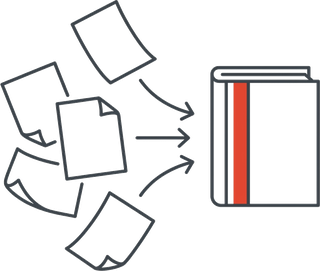
ABC sorting × status sorting brings scattered information into the Company Brain

Install Claude Code / Codex on work PCs and connect them to the record
Build the first use case, then fix it in use until it sticks
The record structure and procedures we set up at one company become NGraph's patterns, so the next company can start faster.
You hope it fits the work. Every time the work changes, it fits less
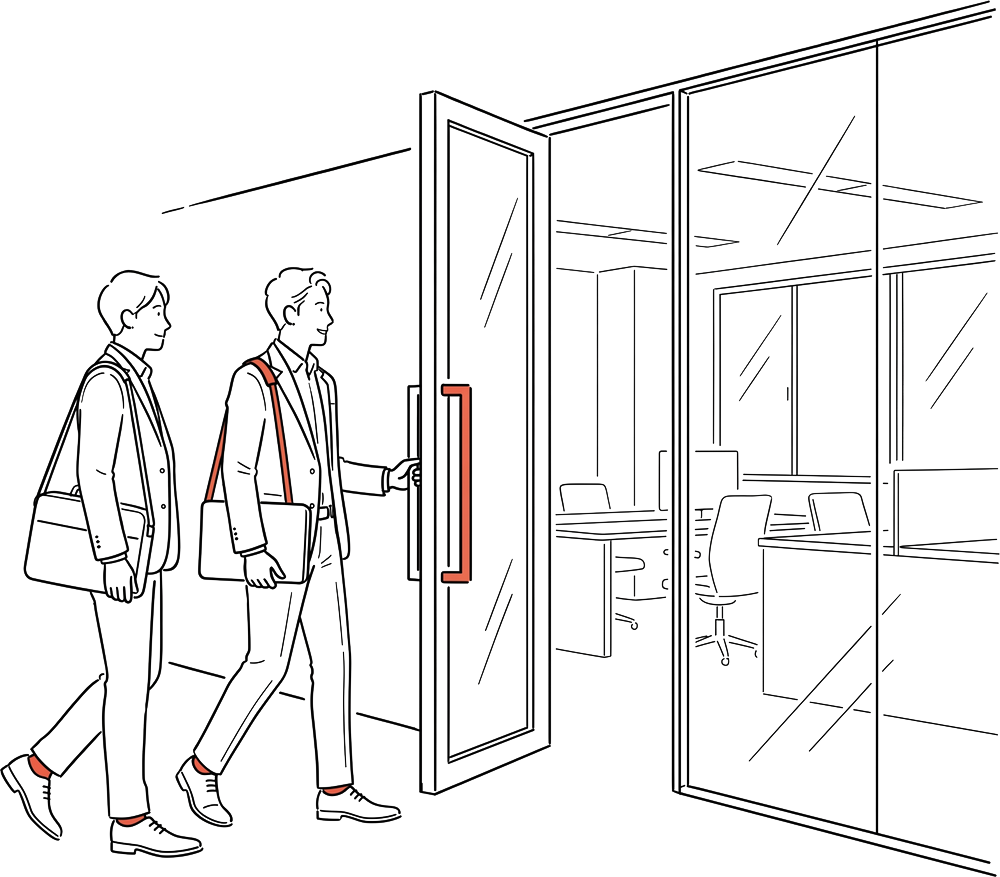
The person who comes inside learns the work and takes responsibility for results. We add AI tools on top of the tools you use now
It's at its newest the moment it's delivered. From that day it ages, and its value falls
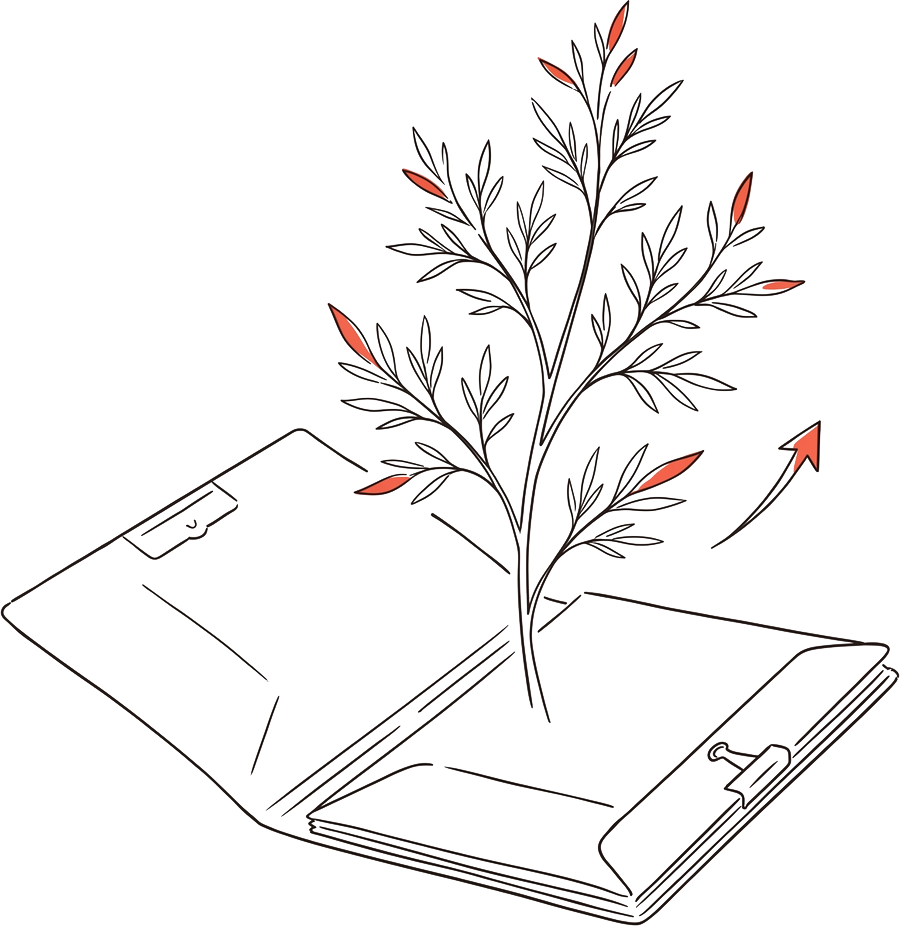
Procedures and rules are kept in a form AI can read. The more they're used, the more your staff refine them, and their value grows. The design documents and data are yours too
A change request travels from staff to vendor to developers, and takes days to weeks to come back. The smaller the fix, the more it gets put off
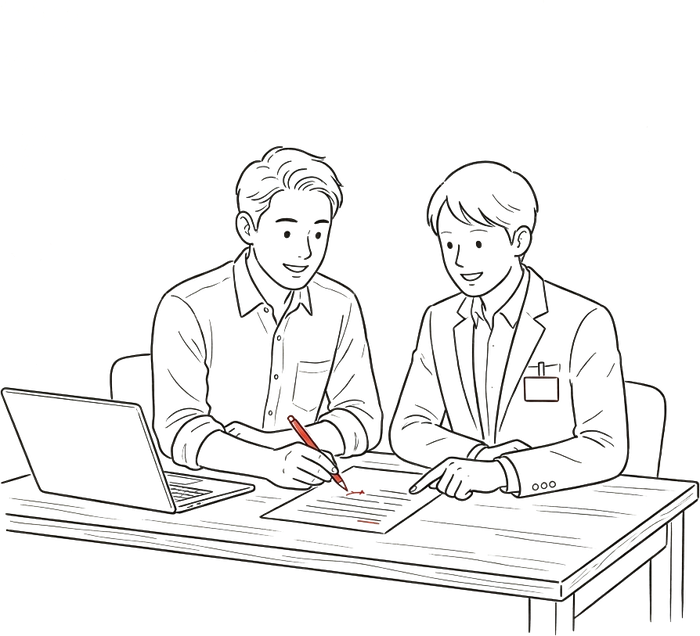
A procedure is one page of plain text. Staff fix it with AI on the spot, and from the next day everyone's AI works the new way
We don't deliver AI. We build an organization that can fix its own AI.
We pick one task and set the scope and cost.
FreeWe try the first task on site at a small scale. If you go live within one month of finishing, the full PoC fee is credited to the main project.
We build it into the work and leave it in a form that gets used. Fixed price for a set scope.
Maintenance, updates, improvements, and running it for you.
It takes a few weeks to a few months. The cost depends on the task and how far we connect.
Choose your industry and answer 8 questions. Your current position on 5 axes is shown on the spot (no sign-up).

Workplace and business
Shingo Takahashi
髙橋 真吾
CEO / AI Planner
Listens to the workplace
and turns it into requirements.
Planning and building, directly linked
Two people handle your work directly

Technology and building
Matt Chana
Matthew John Chana
CTO / AI Engineer
Turns requirements
into working AI.
The person who listens and the person who builds are directly connected.
Nothing lost in relay: the reality on site goes straight into the AI.
Headquartered in Fukui City. In Fukui, Ishikawa and Toyama, we come to your site.
20 items to check before adopting AI (free PDF).
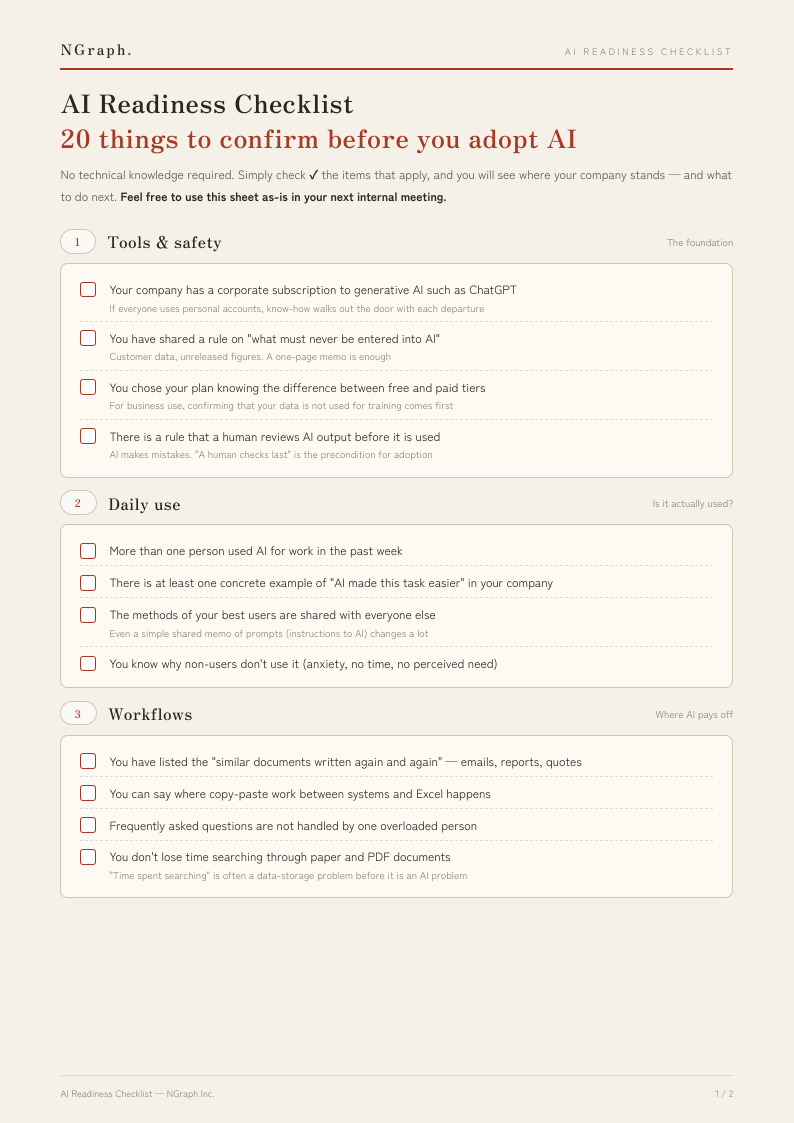
One sheet to check "Is our company ready to bring in AI?" without any specialist knowledge.
Yes. We explain without jargon and you don't need to prepare documents. We work through it while looking at your actual work on site.
A form of support where engineers go inside your company and build AI into the work on site.
It depends on the task and how far we connect. Consultation and estimates are free. You can also start with a small optional PoC.
Mainly mid-sized and small companies, in any industry. You can start with one department's work.
No. We build AI in between the systems, Excel and chat tools you already use.
If you wish, we sign an NDA before starting and agree in advance on the scope of information we handle.
It's fine if you "don't know what to ask". We usually reply within 2–3 business days.